
Every business wants to grow and cut down on busywork but lots of places still waste time on things like typing data into systems or sorting through forms and emails. It feels like these tasks keep piling up even when they should not need so much effort from people. AI automation is starting to change that in 2026 because it goes past simple chat tools and starts handling actual steps in daily operations. Employees might get more room for decisions instead of just clicking through the same stuff over and over. I think the main point is moving from manual entry toward smarter flows that connect different tools.
What AI automation really does is combine machine learning with language processing so systems can read documents and figure out what comes next without someone spelling out every rule. Traditional automation sticks to fixed paths and works okay for clean data but struggles when things get messy or vary a bit. The AI version can pull details from invoices or requests and even suggest actions which makes it feel more flexible. Some people see it as a big step forward while others worry it still needs checks because models are not perfect yet. It seems like mixing both approaches ends up more reliable than hoping one handles everything alone.
There are several areas where this shows up in practice. Data entry from forms and reports gets faster when the system pulls numbers and types automatically though someone should still look over financial details. Customer questions that repeat a lot can be sorted or answered from company files so teams spend time on the harder cases. Reports on sales or performance can be pulled together quicker and HR stuff like sorting resumes or sending reminders becomes less of a slog. Finance teams get help matching payments and spotting duplicates but approvals stay with people. Hospitals use it for tracking audits and incidents instead of spreadsheets though clinical calls obviously need human review. Internal requests can trigger tasks across departments with less back and forth which cuts some of the usual delays.
Benefits show up in productivity and fewer mistakes once things are set up but results depend on how well the data fits and whether staff actually use it. Challenges like keeping information private and making sure tools connect to old systems matter a lot too. Starting small with one clear process makes sense before trying to change everything at once. Companies might begin by listing repetitive jobs then testing a pilot and checking time saved or error drops. Scaling happens after that if it works.
AI agents add another layer because they can aim for goals across systems like reading a request and updating records without constant prompts. They are not fully independent though and logs plus oversight stay important. The future looks like more connected workflows where software and people handle parts together instead of replacing tasks outright. It is not totally clear how fast this will spread or what balance feels right in every industry.
Frequently Asked Questions
Got Questions? We've Got Answers
Q1 What is AI automation in business?
AI automation uses artificial intelligence to perform repetitive tasks, process information, analyze data, and support business workflows with minimal manual intervention.
Q2 How can AI automation reduce manual work?
AI automation reduces manual work by handling activities such as data entry, document processing, customer support, report generation, invoice management, and repetitive administrative tasks.
Q3 How can a company start implementing AI automation?
A company can start by identifying repetitive tasks, selecting suitable AI tools, integrating existing systems, testing a small workflow, and measuring productivity improvements.
Related Blogs
More in AI
AI
Oct 2026
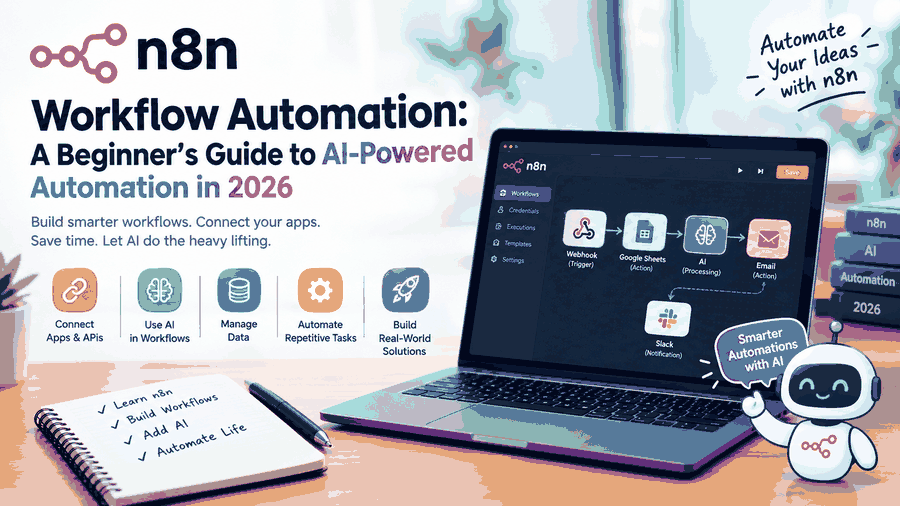
n8n Workflow Automation: A Beginner's Guide to AI-Powered Automation in 2026
Discover how n8n workflow automation works in 2026. Explore AI-powered workflows, key feat...
Read more
5 min read