
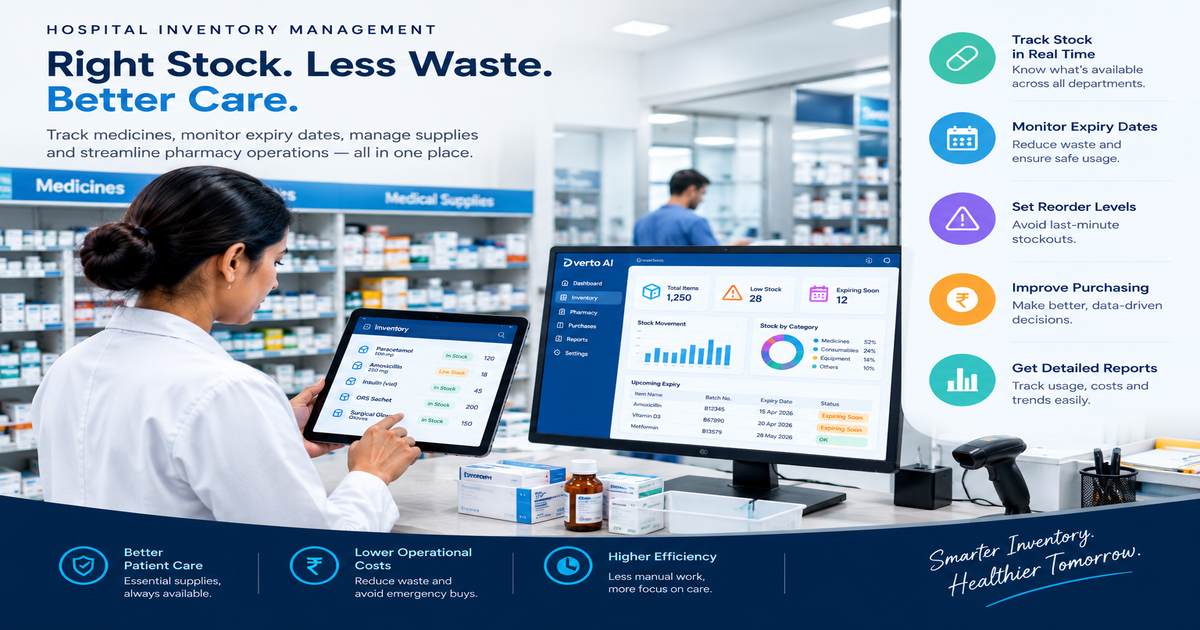
How Clinic Management Software Can Improve Patient Experience in India
A patient's experience at a clinic begins long before they meet the doctor. It starts when they try to book an appointment, ask about consultation timings, register at the reception, or wait for their turn. Even after the consultation, the experience continues through prescription collection, billing, diagnostic reports, and follow-up appointments.
For many clinics in India, managing these activities smoothly can be challenging. Reception teams may handle phone calls while registering patients, doctors may need to search for previous medical records, and patients may have to wait while staff complete paperwork. These everyday issues can make a clinic visit more stressful than necessary.
Clinic management software offers a practical way to organize these processes. By connecting appointments, patient records, billing, prescriptions, and communication, digital systems can help clinics create a more convenient and organized experience.
However, technology alone does not guarantee better patient care. The real benefit comes when clinics use digital tools to remove unnecessary delays, communicate clearly, protect patient information, and make every stage of a patient's visit easier.
1. Why Patient Experience Matters for Indian Clinics
Patients generally expect three things when visiting a clinic: timely attention, clear communication, and confidence that their healthcare needs are being handled properly.
When these expectations are not met, even a good medical consultation can be surrounded by frustration.
Consider a patient who arrives at a clinic for a scheduled appointment but discovers that several patients have already been registered for the same time slot. The patient waits without knowing how long the delay will last. At the reception, staff request information that was already provided during an earlier visit. After consultation, the patient waits again for the prescription or bill.
None of these problems necessarily reflects the quality of the doctor's medical expertise. Instead, they highlight gaps in the clinic's administrative workflow.
A well-organized clinic can address many of these issues by improving scheduling, record accessibility, billing, and communication. These improvements can help patients feel informed and respected throughout their visit.
2. Make Appointment Booking Simpler
Appointment booking is often the first interaction between a patient and a clinic. If the process involves repeated calls, unclear timings, or difficulty reaching the reception desk, patients may become frustrated before their visit even begins.
Clinic management software can help staff maintain a centralized appointment calendar, organize doctor-wise schedules, and track booked, completed, cancelled, or rescheduled appointments.
Depending on the system, patients may also be able to request appointments online or receive booking confirmations digitally.
These features can help clinics:
Reduce confusion around appointment timings.
Identify scheduling conflicts earlier.
Manage cancellations and rescheduling more systematically.
Give reception staff a clearer view of the day's workload.
Provide patients with more reliable appointment information.
For example, a clinic with two doctors can maintain separate schedules while allowing reception staff to view both calendars from one place. This makes it easier to coordinate bookings without switching between registers or messages.
Digital scheduling does not eliminate every delay, especially when emergencies arise. However, it gives staff a better starting point for managing patient flow and communicating expected waiting times.
3. Reduce Waiting and Improve Reception Management
Long waiting times are a common source of dissatisfaction. Patients may not know whether they are next in line, whether the doctor is running late, or whether their registration is complete.
Digital registration and queue-management tools can make this process more organized.
Staff can record patient arrivals, update appointment status, and maintain a visible queue. Where suitable, digital tokens or display screens can help patients understand the order in which they will be called.
India's Ayushman Bharat Digital Mission (ABDM) provides an example of how digital registration can support this process. Its QR-code-based Scan and Register service, previously known as Scan & Share, allows patients at participating healthcare facilities to share their ABHA profile for OPD registration after scanning the facility's QR code and providing consent.
Read the official Government of India update on ABDM's Scan and Register service.
For individual clinics, the practical lesson is straightforward: reduce repeated data entry, make patient status easier to track, and provide clear instructions at the reception.
Clinics should also remember that a digital queue is only useful when staff update it accurately. Patients still need human assistance when priorities change or urgent cases arrive.
4. Keep Patient Records Organized and Accessible
Patients may visit the same clinic over several months or years. During those visits, doctors may need to review previous prescriptions, consultation notes, diagnostic reports, allergies, or treatment history.
When these details are scattered across paper files, spreadsheets, and messaging applications, finding the right information can take time.
Electronic medical records help clinics maintain patient information in a structured digital format. Authorized healthcare professionals can retrieve relevant history more easily, subject to the system's permissions and access controls.
An organized record system can help clinics:
Reduce repeated collection of basic patient information.
Retrieve previous prescriptions and consultation notes.
Maintain more consistent documentation.
Improve continuity between visits.
Reduce dependence on physical files.
For clinics evaluating digital record systems, electronic medical record software for clinics is one relevant area to explore when comparing appointment workflows, clinical notes, prescriptions, and patient information management.
Digital records must be implemented responsibly. Staff need appropriate access permissions, reliable backup procedures, and clear rules for correcting or updating information. Patient data should never be accessible to employees who do not need it for their work.
5. Make Prescriptions and Post-Consultation Instructions Clearer
A consultation does not end when a patient leaves the doctor's room. Patients may need to understand medication instructions, remember a follow-up date, collect a test report, or arrange another appointment.
Paper prescriptions can be difficult to read in some circumstances, while misplaced documents may create additional inconvenience.
Where clinically appropriate, electronic prescription tools can help doctors create structured prescriptions and maintain a record of what was issued. Digital copies can also make it easier for patients to retrieve instructions later, depending on the clinic's workflow.
Useful capabilities may include:
Structured prescription templates.
Clear recording of medication instructions.
Storage of consultation notes.
Follow-up appointment scheduling.
Digital sharing of approved documents.
These tools should support, rather than replace, the doctor's clinical judgment. Prescriptions must be reviewed by the responsible clinician, and patients should have a way to ask questions when instructions are unclear.
A digital document is not automatically a better document. Its value depends on accuracy, readability, and how effectively it helps the patient understand the next step.
6. Improve Billing Transparency and Payment Convenience
Billing is another important part of the patient journey. Confusing charges, delayed receipts, and difficulty confirming payments can affect a patient's confidence in the clinic.
Digital billing tools can help staff generate itemized invoices, record payments, issue receipts, and review outstanding amounts. Depending on the clinic's setup, payment workflows may also support digital payment methods.
The benefits can include:
Faster invoice preparation.
More consistent billing records.
Easier retrieval of previous receipts.
Clearer communication about charges.
Better tracking of completed and pending payments.
For example, when a patient asks for a receipt from a previous consultation, staff can retrieve the relevant transaction instead of searching through a stack of paper documents.
Clinic owners should ensure that billing rules are configured correctly and that staff explain charges clearly. Software can organize the process, but transparency still depends on the clinic's policies and people.
7. Use Reminders to Support Follow-Up Care
Patients may forget appointments, miss scheduled reviews, or overlook instructions to return after a diagnostic test. Clinic staff may try to contact every patient manually, but this becomes difficult as the patient list grows.
Automated reminders can help clinics communicate appointment dates and follow-up schedules more consistently.
Depending on the platform and patient preferences, reminders may be sent through SMS, email, or supported messaging channels.
A clinic can use reminders to:
Confirm upcoming appointments.
Notify patients about schedule changes.
Prompt patients about planned follow-up visits.
Share practical preparation instructions.
Reduce repetitive outbound calls by reception staff.
Messages should be concise, accurate, and respectful of patient privacy. Clinics should use appropriate consent and communication preferences, avoid exposing sensitive medical details in notifications, and provide a way for patients to contact the clinic if plans change.
Reminders should support care rather than pressure patients. Clinical decisions and follow-up recommendations must remain with qualified healthcare professionals.
8. Improve Communication Between Doctors and Clinic Staff
A patient's experience depends on more than the consultation itself. Reception staff, nurses, billing teams, and doctors must coordinate their work throughout the day.
If appointment changes are communicated verbally and billing information is maintained separately, misunderstandings can occur. Staff may repeat tasks or provide patients with inconsistent information.
An integrated clinic management system can give authorized team members access to relevant, up-to-date information according to their roles.
For instance, when an appointment is rescheduled, the reception team can update the calendar. When a consultation is completed, the relevant status can be recorded for the next step in the workflow.
This can help teams coordinate:
Patient arrivals and appointment status.
Consultation progress.
Prescription and report availability.
Billing and payment records.
Follow-up arrangements.
The aim is not to replace personal communication among staff. It is to make important operational information easier to find, reducing the need to repeatedly ask the same questions.
9. Protect Patient Privacy While Digitizing Clinic Operations
Patient experience also depends on trust. People need confidence that their medical histories, contact details, prescriptions, and test results are handled responsibly.
Moving from paper to digital records introduces important responsibilities. Clinics should evaluate security and privacy alongside convenience.
Before selecting software, consider whether it offers:
Role-based access permissions.
Secure authentication.
Appropriate backup and recovery procedures.
Audit trails for relevant activities.
Secure methods of sharing patient information.
Clear policies for data retention and access.
Staff training is equally important. Password sharing, unattended logged-in computers, and sending sensitive records to the wrong recipient can undermine even a well-designed system.
Clinics should assess applicable Indian data-protection requirements and ensure that their chosen technology and internal processes support appropriate safeguards.
Digital transformation should make information easier for the right people to use—not easier for everyone to access.
10. How to Choose the Right Clinic Management Software
Every clinic has different needs. A solo practitioner may primarily need appointments, prescriptions, and patient records, while a multi-doctor clinic may require more extensive coordination and reporting.
Rather than choosing software based only on the number of features, clinic owners should start with their most frequent operational problems.
Consider these questions before making a decision:
Is it easy to use? Receptionists and doctors should be able to learn the core workflows without unnecessary complexity.
Does it fit the clinic's daily operations? Appointment scheduling, registration, records, billing, and follow-ups should match the way the clinic actually works.
Can staff access information appropriately? Permissions should reflect each person's responsibilities.
Does it support reliable reporting? Clinic owners should be able to review operational activity without manually combining several spreadsheets.
Can it grow with the clinic? The system should accommodate additional doctors, services, or locations if needed.
What is the total cost? Consider setup, subscriptions, training, support, maintenance, and any additional modules.
When comparing solutions, clinics can review this hospital management software pricing guide for India to understand the cost factors involved in evaluating healthcare management systems. The final budget should reflect the clinic's actual requirements rather than features it may never use.
It is also worth requesting a demonstration, testing typical workflows, and asking how data can be exported if the clinic changes providers later.
11. Implement Technology Without Losing the Human Touch
A clinic can have excellent software and still deliver a poor experience if patients receive unclear instructions or staff are unwilling to help.
Technology works best when it supports thoughtful service.
Start by identifying one or two recurring problems, such as appointment confusion or difficulty retrieving records. Configure the relevant workflow, train the staff who will use it, and gather feedback from patients and employees.
Monitor practical measures such as waiting times, registration delays, billing corrections, missed appointments, and patient feedback. Compare results before and after implementation rather than assuming that installing software has automatically improved the service.
Keep alternative assistance available for patients who are uncomfortable with smartphones, online forms, or digital payments. Older adults and people with limited digital access should not be disadvantaged because a clinic adopts new technology.
The objective is to make healthcare easier to access, not to force every patient into the same digital process.
Conclusion
Improving patient experience requires attention to every stage of a clinic visit—from booking and registration to consultation, billing, and follow-up.
Clinic management software can help Indian healthcare providers organize these activities, maintain accessible records, improve communication, and reduce avoidable administrative delays. When implemented carefully, these improvements can make the clinic experience more predictable and convenient for patients while helping staff manage their responsibilities more effectively.
The most important step is to begin with real problems. Choose technology that fits the clinic, protect patient information, train the team, and measure whether the changes are making a difference.
Ultimately, digital healthcare should not make a clinic feel less personal. It should remove unnecessary friction so doctors and staff can devote more attention to the people who come to them for care.
Related Blogs
More in Healthcare
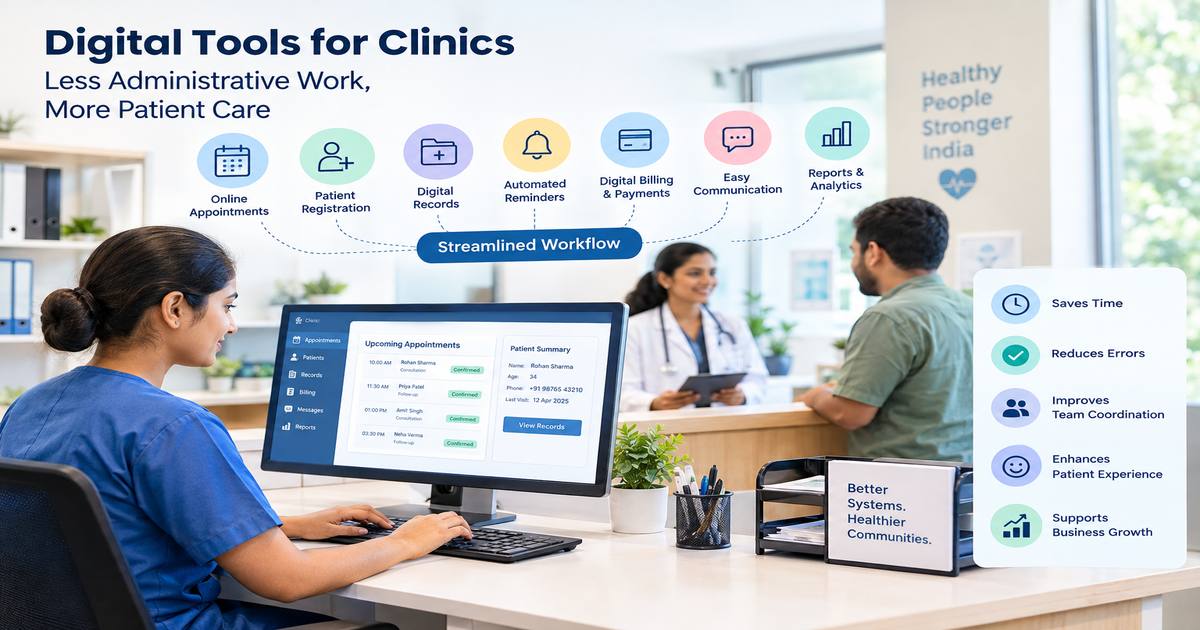
How Digital Tools Can Reduce Administrative Work for Indian Clinics
digital tools for clinics patient experience in clinics, clinic management software India,...
Healthcare Quality Management System (QMS): The Complete Guide for Hospitals & Clinics in 2026
Discover how a modern Healthcare Quality Management System helps hospitals and clinics imp...
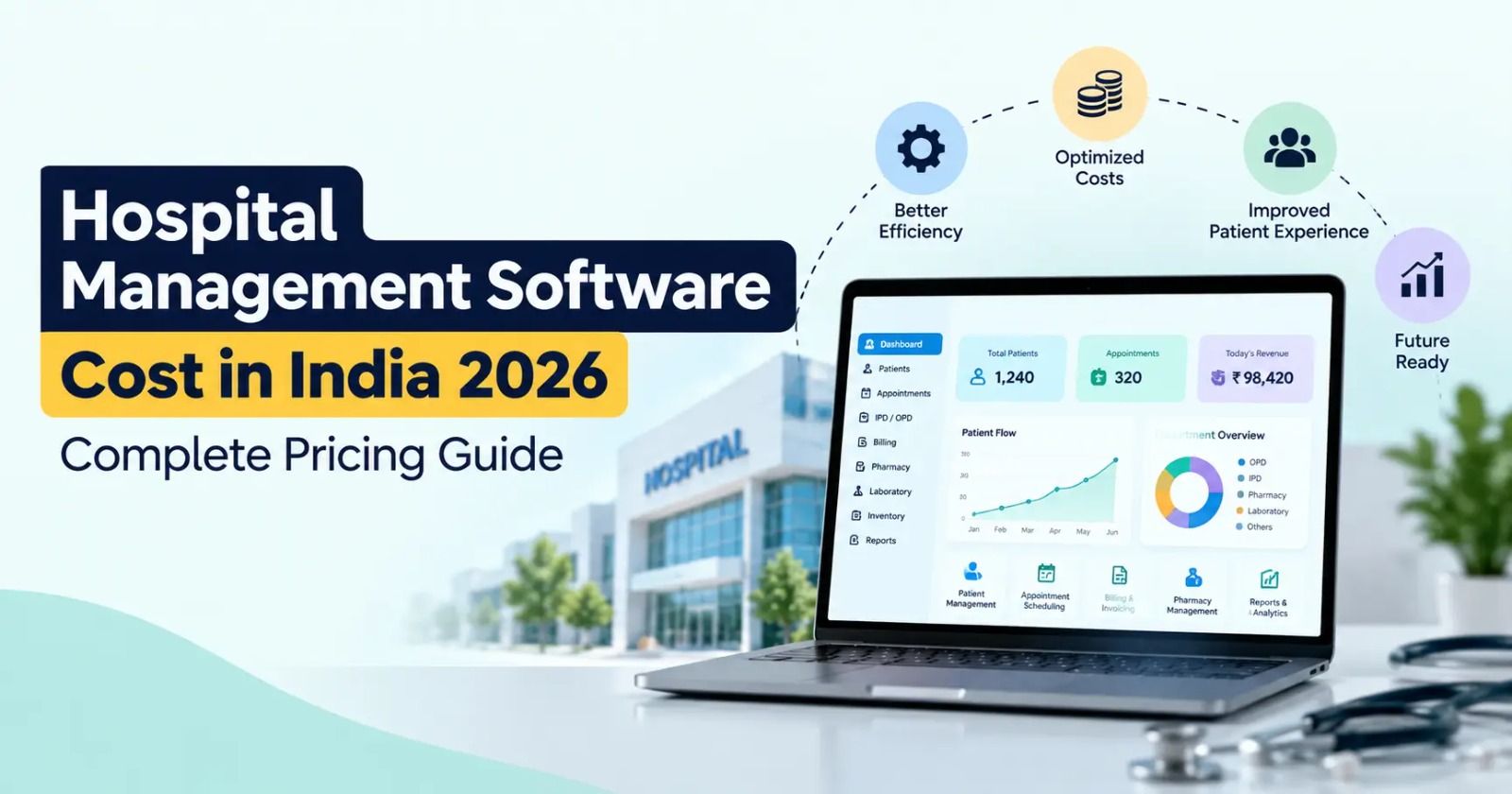
Hospital Management Software Cost in India 2026: Complete Pricing Guide
How much does hospital management software cost in India? Explore pricing models, features...

10 Signs Your Hospital Needs a Hospital Information System (HIS)
Is your hospital still relying on paper records or disconnected systems? Discover the top ...

Why Every Hospital Needs a Hospital Management System in 2026 ?
A Hospital Information System (HIS) helps hospitals connect clinical, administrative, and ...